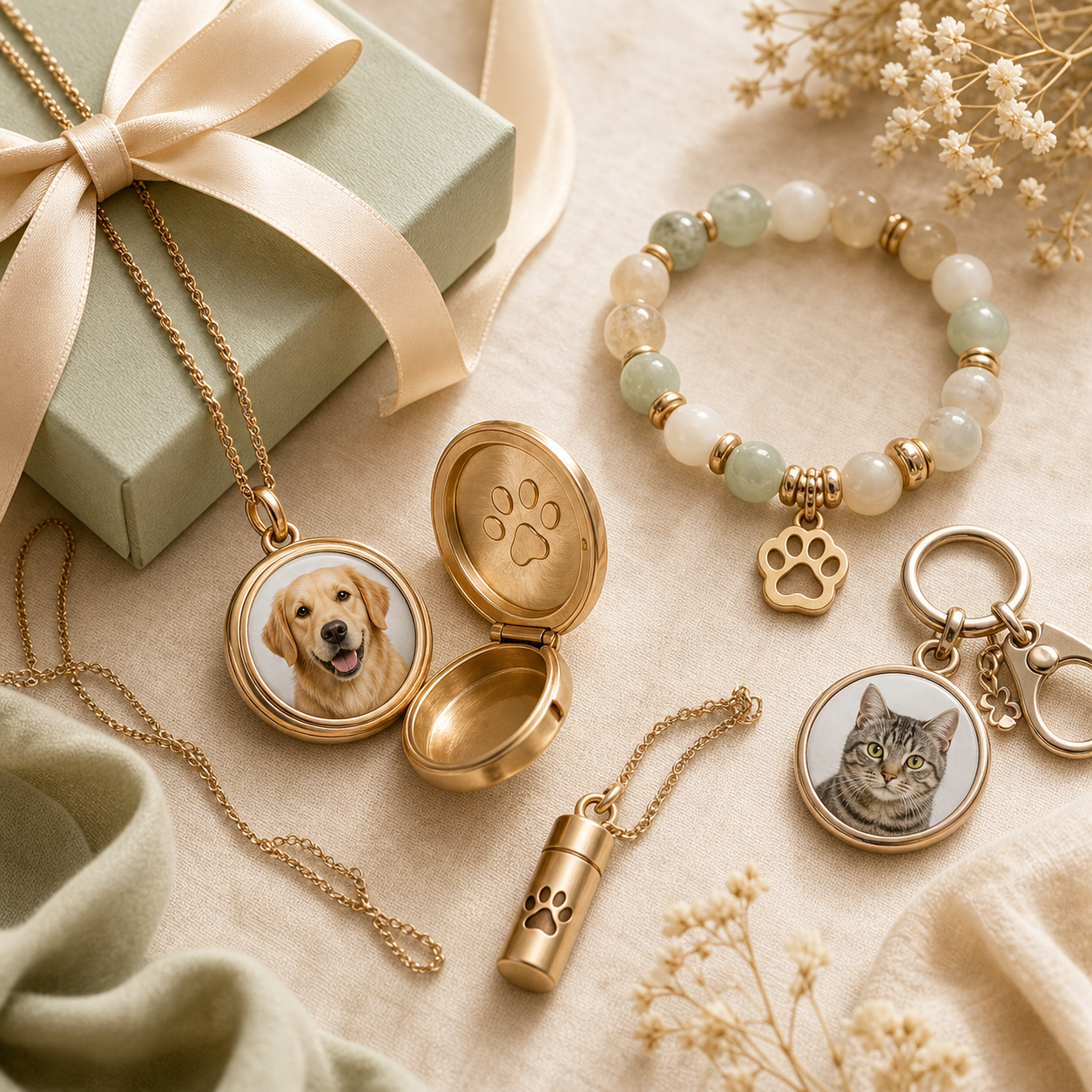
Quick answer: How to choose between jewelry, a keychain, a bag charm, or another small photo keepsake.
Start with the feeling behind the pet memorial necklace or keychain
The best pet memorial necklace or keychain is not always the largest or most expensive choice. It is the gift that understands why the loss hurts. For someone deciding between a wearable memorial and a daily-carry keepsake, the right keepsake should make room for grief without asking the person to feel better quickly.
Before choosing, think about where the memory will live. Some people want something visible at home. Some prefer a private box. Others need a small daily-carry object. Matching the gift to the recipient's routine is usually more important than matching a trend.
Best pet memorial necklace or keychain ideas
These options work because they connect to a real photo, name, habit, or place instead of using a generic pet-loss message.
- a necklace for private closeness
- a keychain for daily use
- a bracelet for subtle comfort
- a bag charm for less formal carry
- a frame if wearable gifts feel too personal
If you are unsure, choose the simplest format first. A clear photo, the pet's name, and a gentle material often feel more thoughtful than a crowded design.
How to personalize it from a photo, name, or story
A strong pet memorial starts with one specific detail: the tilt of the head, a favorite window, the sound of a collar, a walking route, or the way the pet greeted their person. For a beloved pet, those details make the gift feel like it belongs to one life, not to pet loss in general.
If you have a clear photo, use it as the emotional center. If you do not have a photo, use the pet's name and a small note instead. You can also choose a flexible piece like custom pet photo keychain, then let the family decide when they are ready to add photos or objects.
What to write in the card
Keep the card short and specific. A helpful line is: "I wanted you to have something small enough to keep close in everyday life." This kind of wording acknowledges the pet directly and avoids turning grief into a lesson.
If you knew the pet, mention one small memory. If you did not, say that you know the pet was loved and that you are sorry for the changed routines. The pet's name matters. Use it if you know it.
What to avoid when grief is fresh
Avoid jewelry if you do not know the person's style. A keychain is often safer for acquaintances.
Also avoid phrases such as "at least," "you can get another one," or "they are in a better place" unless you know the person finds that language comforting. The safest sympathy gift says, "I remember with you," not "I know how you should feel."
When this gift is better than another option
Choose a visible gift, such as a frame or plaque, when the person has already shared photos and wants the pet remembered openly. Choose a private gift, such as a box or small charm, when the grief is new or the relationship is very personal.
For close family, a more customized piece may be welcome. For coworkers or acquaintances, a card, small keepsake, or gift card toward a future custom item can feel more respectful. The amount of personalization should match the closeness of the relationship.
A simple checklist before you order
Check the spelling of the pet's name, ask before using a private photo, choose a design that fits the recipient's home or style, and make sure the message leaves room for grief. A memorial gift should feel like support, not a performance.
If the gift is being sent later, that is okay. Pet grief does not disappear after the first week. A thoughtful keepsake can be meaningful days, weeks, or even months after the loss, especially when it arrives with a note that says there is no pressure to use it right away.