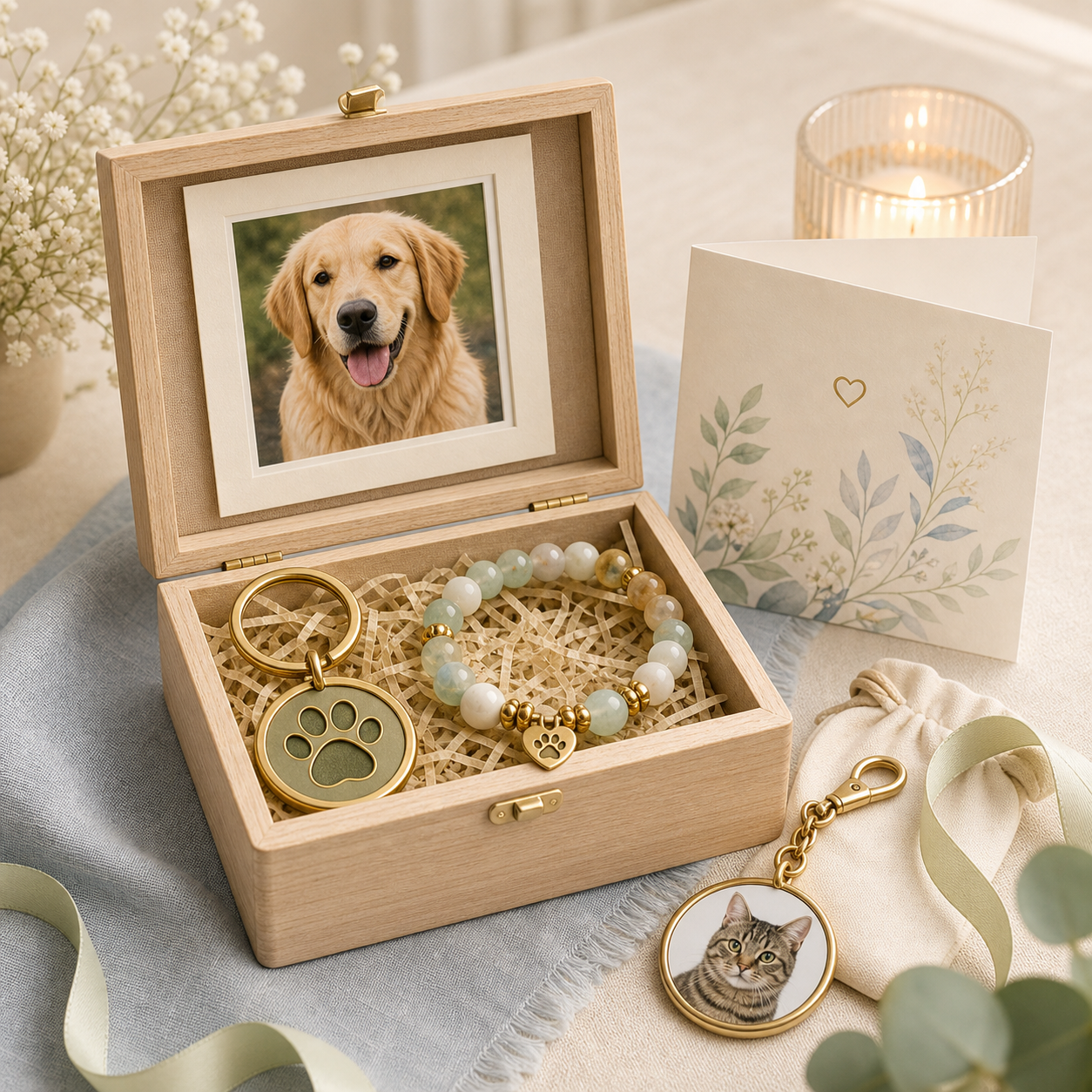
Quick answer: A pet memorial keepsake box gives small things a protected place: the collar, tag, photo, letter, or toy that still carries the shape of daily love.
Start with what feels hardest to put away
The best pet memorial keepsake box usually begins with the item you cannot quite move. It may be a collar by the door, a tag that still makes sound, a favorite toy, or a photo that catches you off guard. That object can guide the whole box.
You do not have to fill the box immediately. A memory box can grow slowly. Some people place one item inside after the first week, then add photos or letters months later.
Collars, tags, and everyday objects
Collars and tags are common because they carry daily sound and touch. If the collar feels too intimate to display in a frame, a box gives it a protected place without making it public.
Other everyday objects can matter too: a tiny toy, a name charm, a piece of blanket, or the leash clip from a favorite walk. Choose objects that feel specific, not objects you think a memorial is supposed to include.
Photos and printed memories
A printed photo helps the box feel warm instead of only archival. Choose one photo where the pet's personality is clear. It does not need to be perfect. A slightly imperfect everyday photo can be more comforting than a formal portrait.
You can add a small note behind the photo: where it was taken, what the pet loved, or one sentence about that day. Those details become precious later, when memory starts to soften around the edges.
Letters, cards, and small rituals
A letter to your pet can be private and unfinished. It can say thank you, I miss you, I am sorry, or I remember when. Fold it into the box without judging the words.
If friends sent sympathy cards, save the ones that felt truly kind. A keepsake box can hold the proof that other people recognized your loss, which may matter on days when pet grief feels invisible.
Ashes, paw prints, and delicate items
If you include ashes, keep them in a secure container. Do not place loose ashes in a box with paper, fabric, or photos. A small labeled urn, sealed pouch, or inner container is safer.
Paw prints, fur clippings, and clay impressions should be wrapped or separated from items that may scratch them. A pet memorial keepsake box works best when it protects fragile objects as well as emotional ones.
How to give one as a gift
A keepsake box can be a thoughtful sympathy gift because it does not force display. Add a short card: "I thought this might give some of Bella's small things a safe place, whenever you are ready."
If you are not sure what style to choose, keep it simple. A clean box with space for a name or photo is safer than a design with a long poem or strong religious wording.