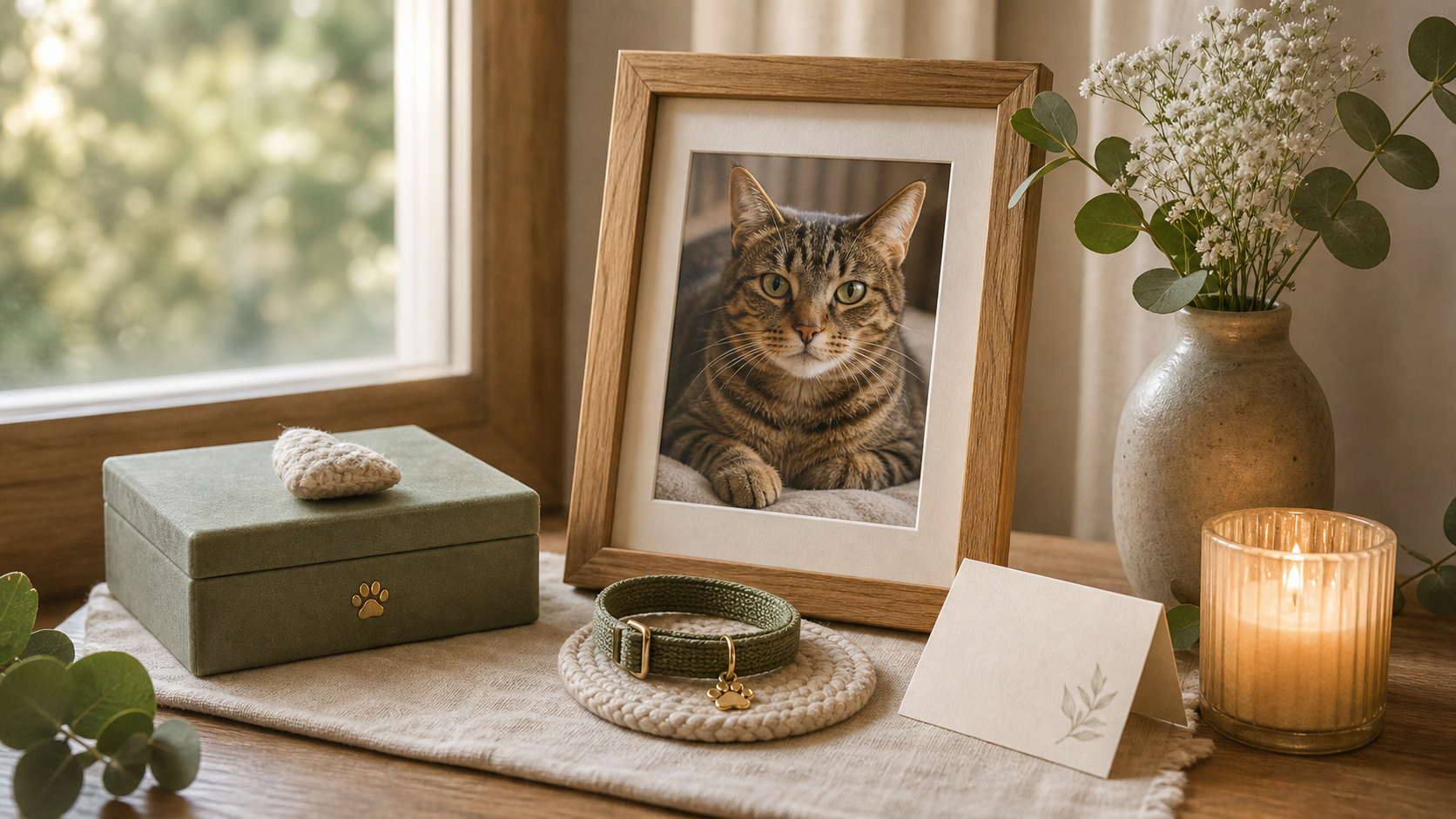
Quick answer: To remember a cat after death, start with one favorite photo, one small object, and one quiet place. A cat memory shelf, keepsake box, candle ritual, custom portrait, or written list of ordinary memories can help you honor your cat without forcing yourself to feel ready.
Losing a cat changes the shape of a home. The window looks different. The chair feels too empty. The sound you expected at feeding time is gone. If you are wondering how to remember a cat after death, you may not be looking for something dramatic. You may simply be trying to keep love from feeling like it has nowhere to go.
A cat memorial can be as private or visible as you need. It can live on a shelf, inside a box, on your phone, in a garden, or only in a sentence you repeat to yourself. There is no correct size for remembrance. There is only what helps you breathe a little easier.
What is the simplest way to start remembering a cat?
Choose one photo that feels like your cat. It does not need to be technically perfect. It might be the photo where they are sitting in their usual sun patch, curled on the blanket they claimed, watching from a windowsill, or looking a little too serious in the way only they did.
Place that photo somewhere gentle: a bedside table, desk, bookshelf, or windowsill. If seeing it right away hurts too much, save it in a folder and come back later. Remembering should not feel like a test you have to pass.
How do you make a small cat memory shelf?
A cat memory shelf can be simple: one framed photo, a collar or tag, a candle, a tiny plant, and perhaps a small note with the cat's name. The shelf does not need to look like a formal memorial. It can look like a corner of your home where your cat is still gently included.
If you want ideas for arranging one, our cat memorial shelf ideas guide covers photo placement, candles, collar displays, and how to keep the space peaceful rather than heavy.
What should you do with your cat's collar or tag?
If your cat wore a collar or tag, you do not have to decide immediately what to do with it. Some people place it beside a photo. Some keep it in a drawer until the first shock softens. Some put it in a pet keepsake box with a printed photo, a small toy, cards, or a lock of fur if they have one.
A box can be helpful because it gives important things a place without making them visible all day. That privacy can matter, especially when grief comes in waves.
Can a photo keepsake help?
Yes, if it feels comforting rather than rushed. A photo keepsake can turn one familiar image into something you can hold, display, or carry. For some people, a pet memorial light frame works well because the soft light feels warm at night. For others, a small custom pet photo keychain feels easier because it stays private and portable.
If you are still choosing a photo, start with the expression that feels most like your cat. The eyes, posture, and ordinary setting often matter more than a polished pose.
What if looking at photos hurts too much?
Then wait. Love does not disappear because you are not ready to look. Many people need time before photos feel comforting. You can remember your cat in quieter ways first: keeping a blanket folded, writing their name, lighting a candle, or leaving their favorite spot undisturbed for a while.
Grief often changes texture. A photo that feels impossible in the first week may become precious later. Give yourself permission to move slowly.
Should you write down memories of your cat?
Writing can help because it protects the small details. Write a list of ordinary things: the sound of their paws, the way they demanded food, the place they slept, the strange habit that made you laugh, the look they gave when they wanted attention.
You do not have to write beautifully. A few imperfect lines can become a kind of memory jar. Later, those notes can help if you decide to create a custom portrait, card, or cat memorial keepsake that includes more than a photo.
Is a candle or plant a good cat remembrance idea?
A candle can be meaningful when you want a small ritual. You might light it on the first evening, on adoption day, or whenever the missing feels loud. A plant can also work if you want something living and quiet near a window your cat loved.
Keep the ritual simple. You might say the cat's name, look at a photo, or sit for a few minutes. You do not need the perfect words. Presence is enough.
How can you remember a cat if you share the grief with family?
If more than one person loved the cat, invite each person to choose one memory or object. One person might pick a photo. Another might write a sentence. A child might draw the cat or choose a small stone for the shelf. Shared grief can be tender when everyone has room to remember differently.
If you are supporting someone else, read what to say when someone loses a cat before offering advice. Sometimes the best support is not fixing the grief, but witnessing it.
What if you feel guilty after your cat dies?
Guilt is common after pet loss. People replay decisions, symptoms, vet visits, timing, and final moments. A memorial will not erase those feelings, but it can help widen the story. Your cat's life was not only the ending. It was years or months of routines, comfort, trust, play, and ordinary love.
When guilt appears, try adding one life memory beside it: "She slept on my pillow." "He waited by the door." "She loved that blanket." Remember the whole cat, not only the goodbye.
What is the best cat memorial?
The best cat memorial is the one you can live with. For one person, that may be a shelf with a framed photo and collar. For another, a private box. For someone else, a cat memorial suncatcher in the window, a custom portrait, or a small piece of pet memorial jewelry.
Choose something that honors your cat's real presence in your life. The goal is not to move on from your cat. It is to let memory become part of the home in a way that feels gentle enough to keep.