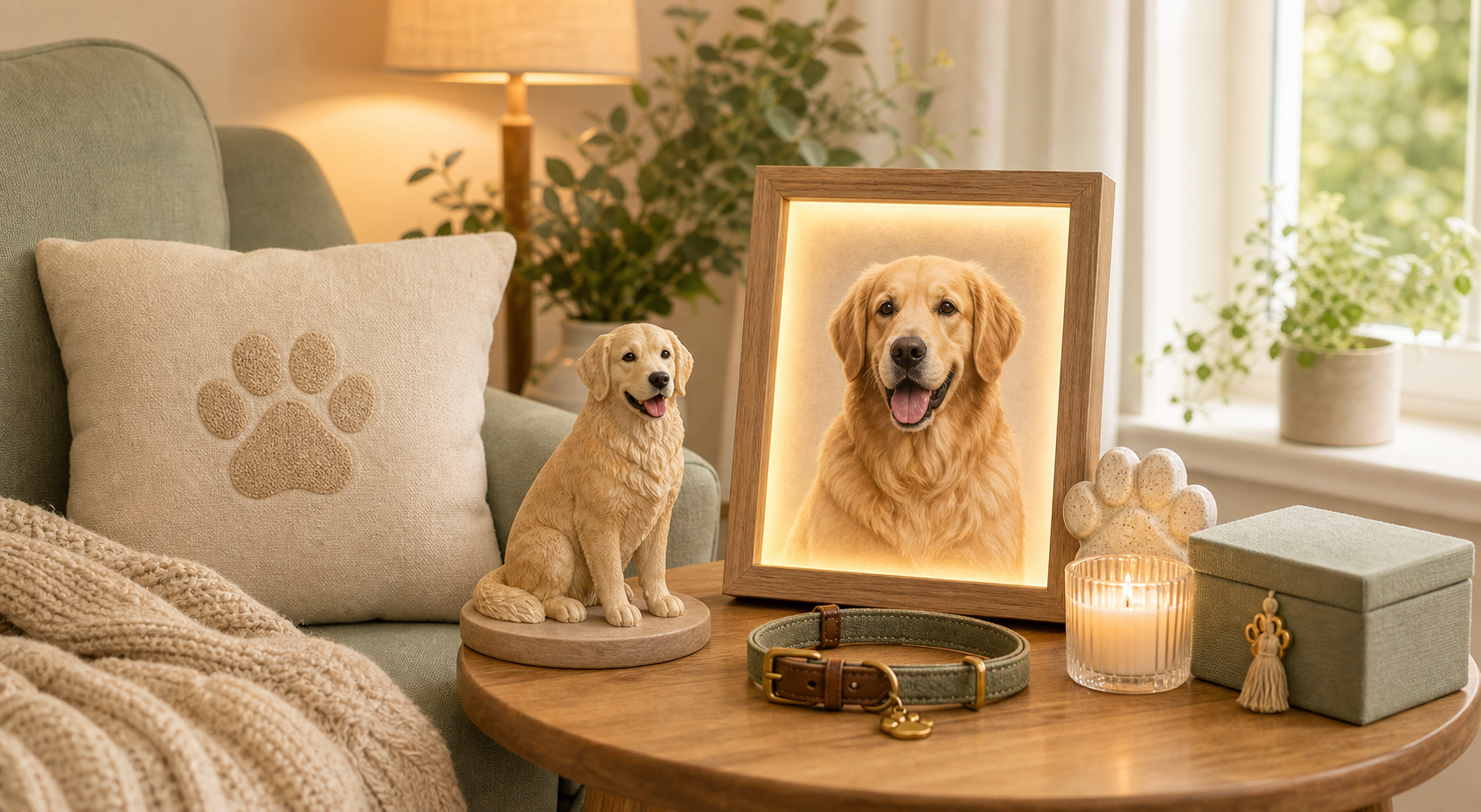
If you are wondering how to memorialize a pet at home, start smaller than you think. Grief can make every decision feel loaded. You do not need to design a perfect tribute right away. You only need one place where the memory feels welcome.
Home memorials work because pets are woven into the home itself. They had favorite windows, sleeping spots, doorways, blankets, bowls, and morning routes. A memorial does not bring those routines back, but it gives the love somewhere to rest.
Where should a pet memorial go in the house?
Choose a place you naturally pass, but not one that feels painfully unavoidable. A bookshelf, bedside table, hallway console, window ledge, or small cabinet can work. Some people prefer a private bedroom corner. Others want the memorial in a shared family room because the pet belonged to everyone.
If your pet loved sunlight, a window area can feel right. If evenings were the hardest, a table with a small lamp or pet memorial light frame can create a gentle ritual at the end of the day.
What should you put on a pet memorial shelf?
Start with one clear photo. Choose the expression you miss most, not necessarily the technically perfect picture. Add the collar, tag, a favorite toy, a printed quote, a candle, flowers, or a small name plate. If you have ashes, fur, paw prints, or notes, a personalized keepsake box can keep them safe without making them feel hidden.
For families, leave room for children to add drawings or letters. For multi-pet homes, you may want a shelf that includes all pets, not only the one who passed, so the story feels connected.
How can photos become part of healing?
Photos can be hard at first. If looking at them hurts too much, wait. When you are ready, choose three kinds of photos: a face you love, a daily-life moment, and a funny or imperfect picture that brings back personality. A custom digital pet portrait can soften one favorite image into art, while a simple print can keep the memory close without changing it.
Do not delete blurry photos too quickly. Sometimes the photo where your dog is half out of frame or your cat is sitting in a cardboard box carries more truth than the posed picture.
What rituals help when the house feels too quiet?
Rituals give grief a rhythm. You might light a candle on the day of the week your pet passed, write one memory a night for a month, visit their favorite walking path, or place fresh flowers near their photo. You can make a small memory jar and invite family members to add notes when a memory arrives.
Some people create a digital album. Others keep a physical box. Some plant herbs or flowers in the garden. The ritual only needs to feel honest to you. It does not need to make sense to anyone else.
How do you memorialize a pet without making grief feel stuck?
A memorial should make space for love, not trap you in the day of loss. That means it can change. You may start with a candle and collar, then later move to a framed photo. You may keep the shelf for years, or quietly pack some items into a box when the time feels right. None of these choices means you loved your pet less.
If you want ideas for arranging a shelf, PawSoul's pet memorial shelf guide shows soft ways to combine photos, frames, suncatchers, quote cards, and keepsakes without making the space feel crowded.
What if you are making a memorial for someone else?
Ask gently before creating a large display. For a grieving friend, a smaller item is usually safer: a photo frame, card, keychain, or sympathy gift bundle. If you know their pet's favorite photo, you can offer to help print it. If not, let them choose.
The heart of any pet memorial is permission. Permission to miss them. Permission to smile at a memory. Permission to keep loving an animal who changed the shape of home.