When someone loses a cat, people sometimes underestimate the depth of the loss. A cat may not have greeted every visitor or joined every family photo, but they may have been the one who slept beside your friend every night, sat beside them during hard workdays, or followed them from room to room in a quiet little routine.
If you want to know how to comfort someone who lost a cat, begin by believing the grief. You do not need to compare it to anything. You do not need to explain it. You only need to make it safe for your friend to miss someone they loved.
What should you say first?
Say the cat's name. "I am so sorry about Jasper. I know he was such a big part of your home." That is better than a polished quote because it is personal and direct. If you did not know the cat well, you can still say, "I know how much she meant to you."
If words feel awkward, admit that gently. "I do not have perfect words, but I am here, and I am so sorry." Most grieving people do not need eloquence. They need sincerity.
What should you avoid saying?
Do not say "it was just a cat." Do not suggest getting another cat. Do not say "at least" before anything. Even "at least she lived a long life" can hurt if the person is still in the shock of missing her daily presence.
Avoid making the grief about your discomfort. If your friend cries, you do not need to rescue the moment. Let it be sad. Silence can be compassionate when it is steady and not impatient.
How can you help beyond words?
Offer practical support that does not require your friend to organize you. "Can I send dinner tonight?" is often easier to answer than "let me know if you need anything." You can also offer to help put away food bowls, return medication, pick up groceries, or sit with them while they decide what to do with the cat's things.
Check in again after a week or two. The first messages often arrive quickly, then stop. Cat grief can hit hardest in repeated small moments: opening the door, sitting on the couch, waking up without the familiar weight nearby.
Should you share memories of the cat?
Yes, if you have a real one. "I remember how Cleo always sat in that sunny chair" can mean more than a general condolence. Memories prove the cat's life touched other people too.
If you do not have a memory, ask gently later, not immediately: "When you feel ready, I would love to hear about her favorite little habits." Do not pressure them. Some people want to talk. Others need time before stories feel bearable.
When is a cat sympathy gift helpful?
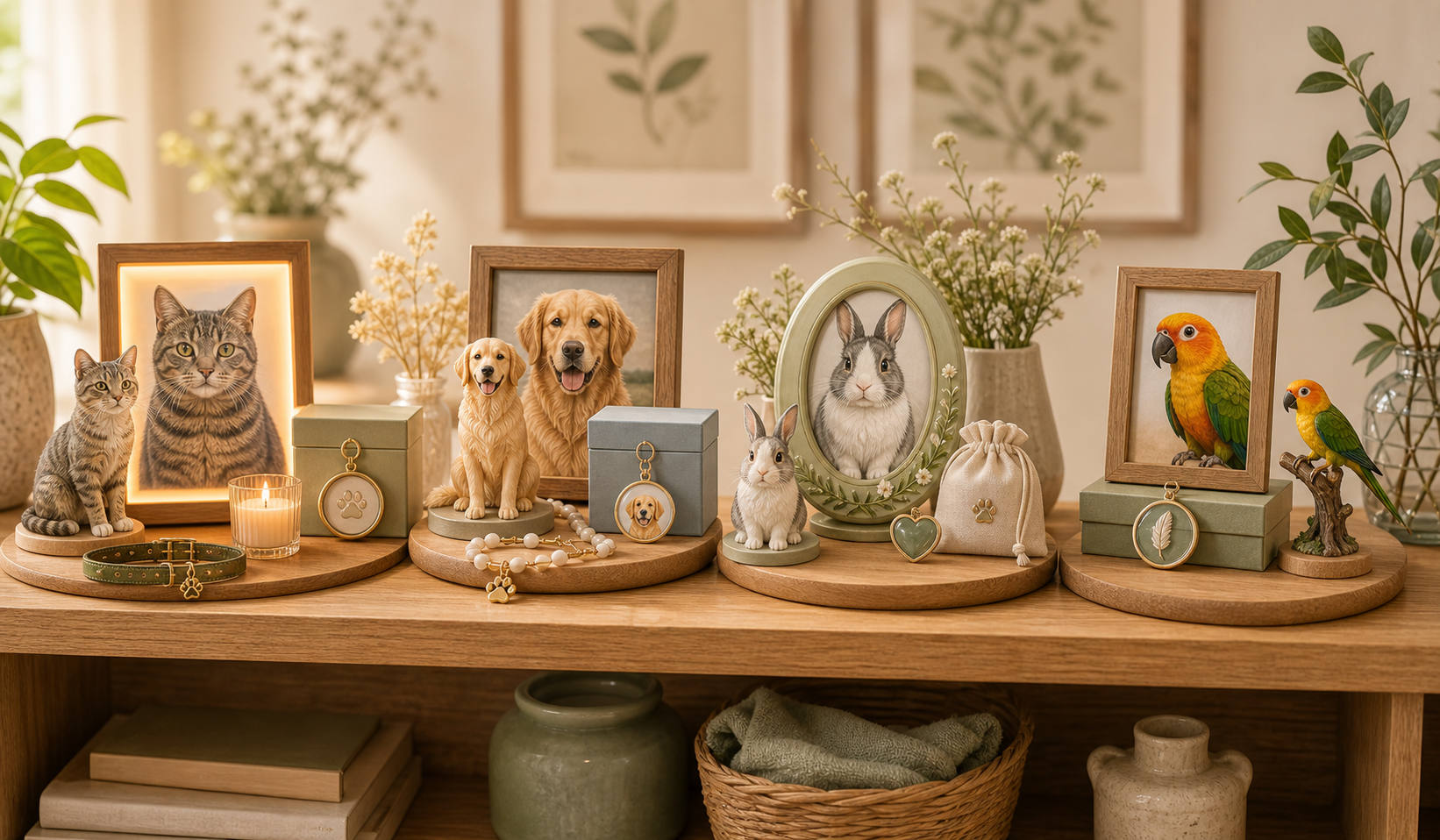
A gift can help when it validates the bond without demanding a response. A handwritten card, custom portrait, small framed photo, donation, or cat memorial keepsake can say, "I remember with you." If your friend is private, choose something small. If they already share photos and memories, a more visible piece may fit.
For a window-loving cat, a memorial suncatcher can feel tender. For someone who wants the cat close in daily life, a photo keychain is subtle. For a home memorial, a keepsake box can hold a collar, tag, or note.
What if your friend seems okay?
Do not assume they are over it. Many people function normally while grieving. They may go to work, answer messages, and still feel the quiet house sharply at night. A simple check-in can be enough: "I was thinking about you and Milo today. No need to reply."
Comfort is not one perfect gift or one perfect sentence. It is the willingness to remember their cat after the first wave of sympathy has passed. That is often what helps most.