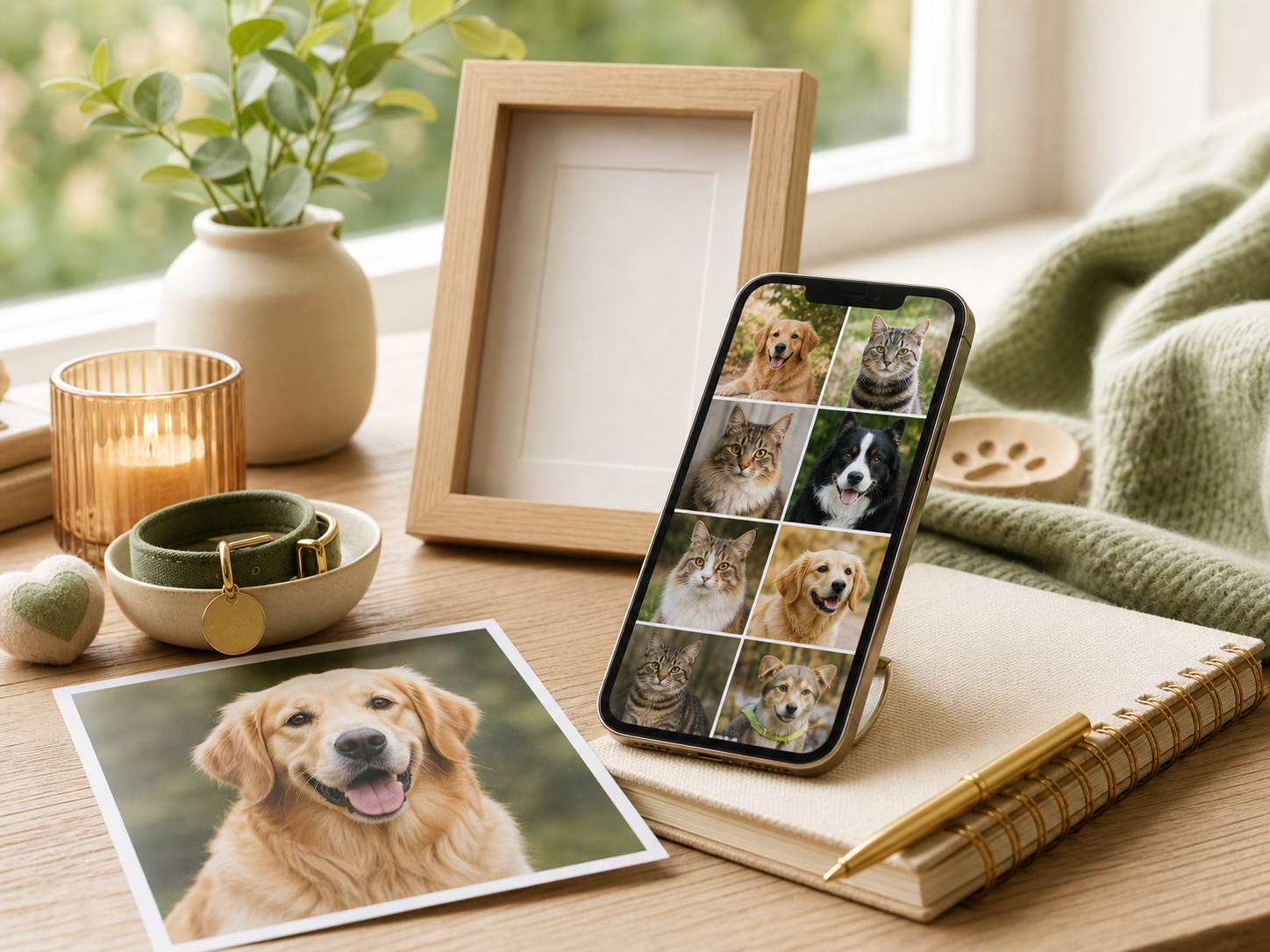
Quick answer: Choose a clear, naturally lit photo taken near your pet's eye level. The face should be sharp, the eyes visible, and the ears, coat markings, and expression easy to see. If the portrait is a memorial gift and you only have older photos, send the best main photo plus a few extra reference images.
Choosing a pet portrait photo can feel emotional, especially when the gift is being made in memory of a dog or cat who has passed. You may have hundreds of pictures, but only a few that truly feel like them. The right image helps a portrait, light frame, keychain, or custom keepsake carry the pet's real personality, not just their outline.
What makes a photo good for a pet portrait?
A good pet portrait photo shows the face clearly. The eyes should not be hidden in shadow, the nose should not be blurred, and the main markings should be visible. If your pet has a special ear shape, white chin, tabby pattern, curled tail, or one very expressive look, choose a photo where that detail appears naturally.
Personality matters too. A formal sitting pose can work, but an everyday photo may feel more honest. A sleepy cat by the window, a dog looking up with a familiar grin, or a rabbit sitting in their favorite corner can all make a better portrait than a stiff image with perfect lighting.
Should the photo be close-up or full body?
For most custom pet portraits, a close-up or half-body photo works best. The artist or design team needs enough detail in the face to capture expression. Full-body photos are useful when the pose, tail, or body markings matter, but they can make the face too small if the image is used as the main reference.
If you are ordering a custom digital pet portrait, send one strong close-up as the main image and one full-body photo if you want the body shape included. For smaller keepsakes like a pet photo keychain, a clear face-focused photo is usually safer.
What lighting is best?
Natural light is usually best. A photo taken near a window, outside in shade, or in soft morning or afternoon light will show fur and eye color more clearly than a dark indoor snapshot. Avoid harsh flash if it makes the eyes glow or flattens the face.
If you are taking a new photo, stand near a window and let your pet face the light. Do not force the pose. A calm, familiar expression is more valuable than a perfect studio setup.
What angle should you choose?
Eye-level photos are the easiest to turn into portraits. When the camera is too high, the pet's head may look distorted. When it is too low, the nose or chin may dominate the image. For dogs and cats, kneel or sit so the lens is closer to their face height.
A slight side angle can be beautiful if it shows the pet's profile or favorite expression. But if you want the portrait to feel recognizable to family members, a mostly front-facing image is often the safest choice.
Can you use an old photo after a pet has passed?
Yes. Memorial keepsakes often come from old phone photos, social media images, or printed pictures. If the photo is the one that feels most like your pet, it may still be worth using even if it is not technically perfect. The emotional truth of the image matters.
That said, send the clearest version you have. Avoid screenshots if the original file exists. If the photo is printed, scan it or photograph it in even light without glare. For a pet memorial light frame, a slightly soft image may still work if the face is recognizable and the composition is simple.
Should you send extra reference photos?
Yes. Extra photos help with accuracy. Send one main photo for the pose or expression, then two or three reference photos that show coat color, eye color, ears, size, or unique markings. This is especially helpful for black pets, white pets, long-haired cats, brindle dogs, and pets with subtle face patterns.
Reference photos do not all need to be beautiful. They just need to provide information. A blurry side photo may still help show a collar, tail, or patch of fur that the main photo hides.
What photos should you avoid?
Avoid photos where the face is tiny, heavily filtered, too dark, or covered by objects. Avoid strong motion blur unless it is the only meaningful photo you have. Also be careful with extreme wide-angle phone shots, because they can make the nose look larger than it really was.
If the photo is for a memorial gift, avoid choosing only the saddest image from the pet's final days unless that is truly what the family wants. Many people prefer a photo that remembers the pet's everyday life, not only the goodbye.
How do you choose between several favorite photos?
Ask three questions: which photo looks most like them, which photo feels most like them, and which photo will still feel comforting to see every day? The best choice usually answers at least two of those questions. If one photo is technically clear but emotionally flat, and another is slightly imperfect but full of personality, the second may be better.
You can also match the photo to the product. A bright face photo works well for portraits and frames. A simple centered photo works well for keychains. A softer home photo may feel right for a remembrance shelf or pet memorial frame.
What if the photo includes another person or pet?
If the pet's face is clear, it may still work. Tell the maker whether you want only one pet included or whether the group photo is part of the memory. For multi-pet portraits, provide a clear photo of each pet if possible, even if the final keepsake will combine them in one design.
If a person appears in the photo, choose a version where the pet is not hidden by hands, arms, or heavy shadows. A cropped image can work, but the face should stay sharp after cropping.
What should you send when ordering?
Send the main photo, two or three reference images, the pet's name, and any note about personality: shy, playful, gentle, proud, sleepy, silly, protective, or always watching from the window. These small notes help the finished keepsake feel personal.
If you are not sure which photo is strongest, send a few and ask for guidance. Our photo review process is built for that: we check layout, name, date, and image details before production, so the keepsake feels careful rather than rushed.